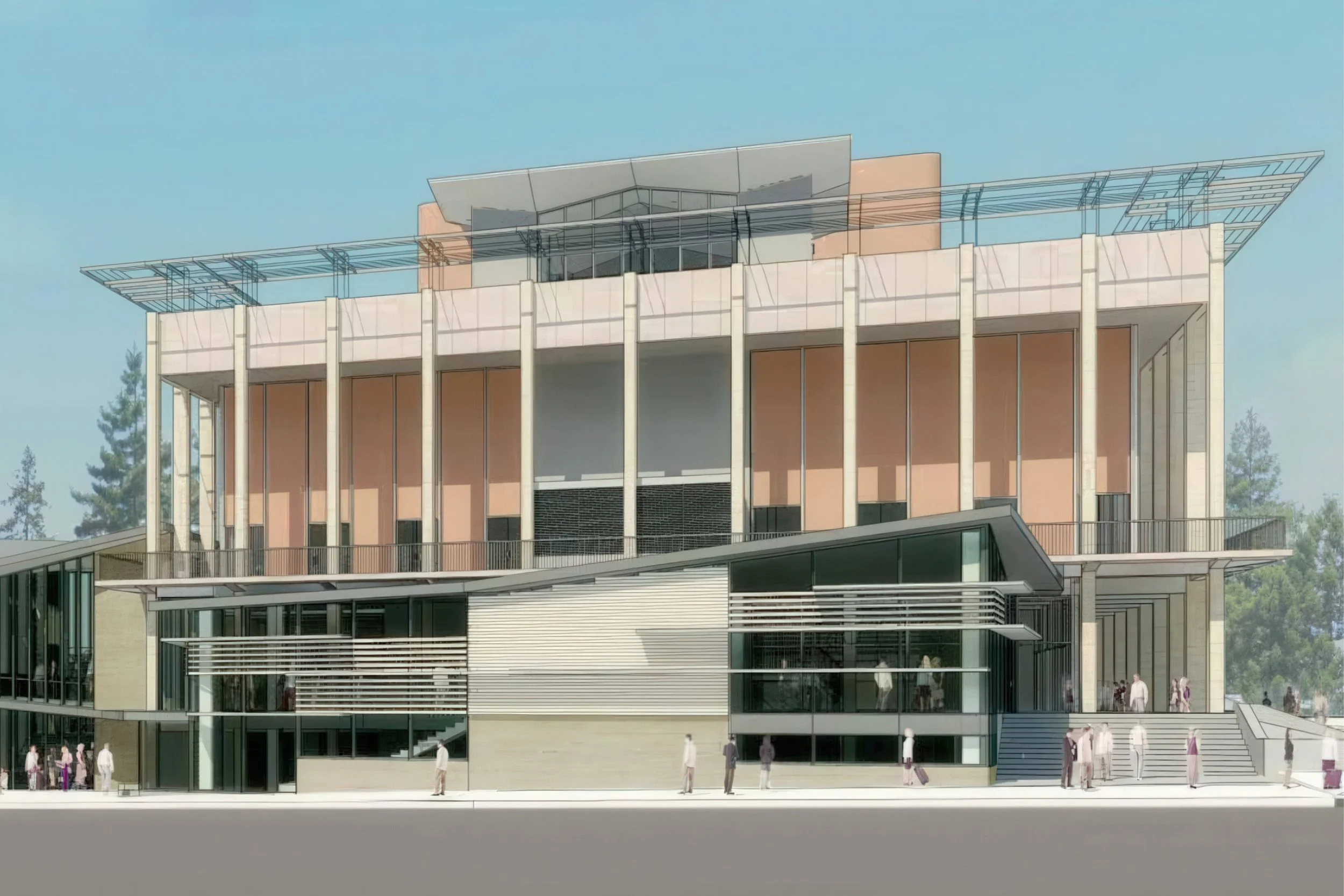
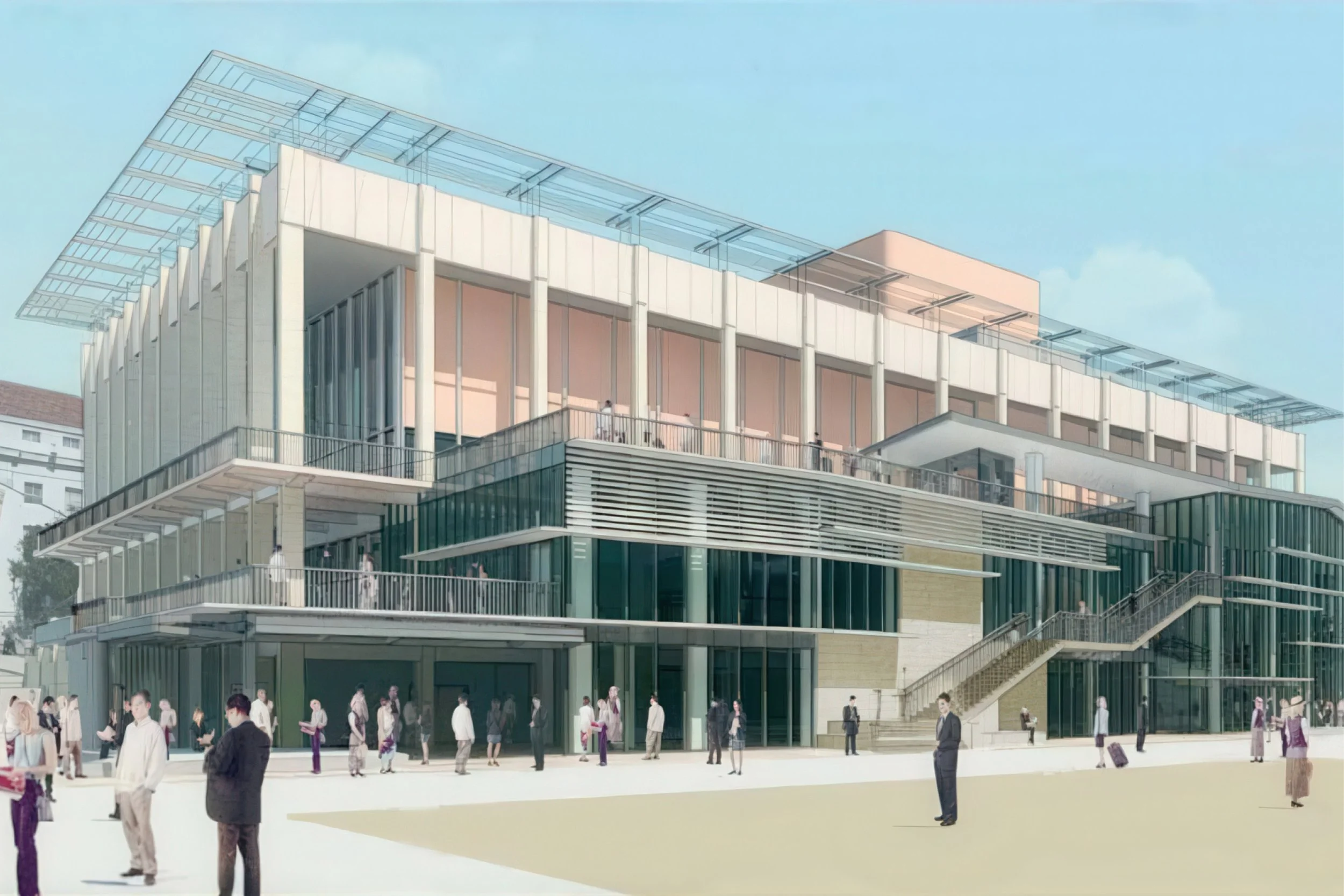
UC Berkeley Student Community Center (MLK Hall)
UC Berkeley, CA
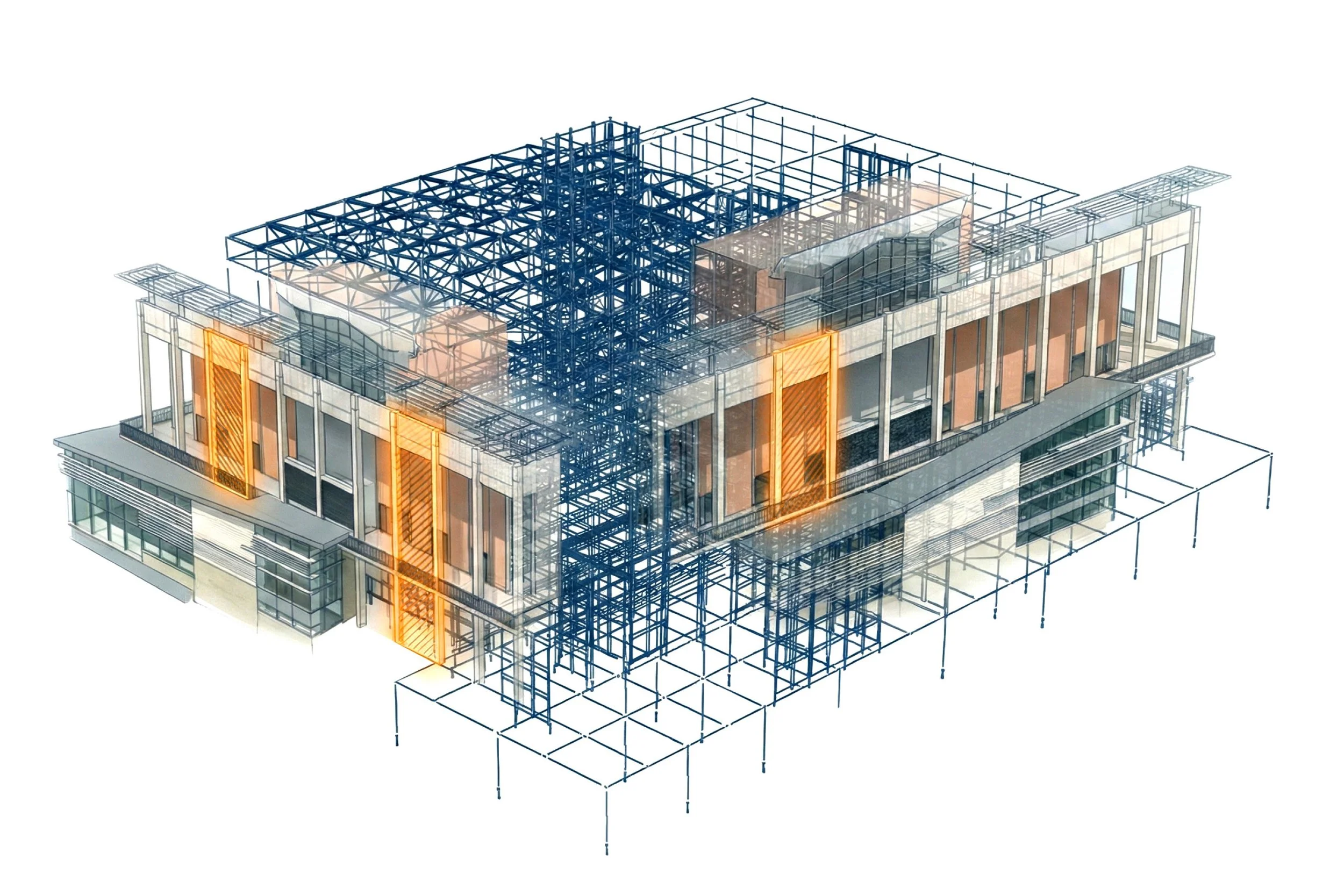
The renovation and expansion of MLK Hall at UC Berkeley illustrates Kandou’s philosophy of using the full range of analysis and materials to solve seismic challenges in ways that are both technically sound and architecturally respectful. Additions to the existing 1958 concrete structure created a need to evaluate and strengthen the original shear walls and diaphragms. The project began with simple hand calculations, progressed to nonlinear pushover analysis, and culminated in nonlinear response history simulations that captured how the integrated old and new structures would behave during earthquakes.
The key innovation was the use of carbon fiber reinforced polymer (CFRP) to strengthen select concrete walls. Traditional retrofit methods such as inserting new concrete walls or steel bracing would have disrupted architectural features and impacted the design vision. CFRP overlays instead transformed collapse-prone shear walls into ductile elements, improving seismic performance without compromising space, aesthetics, or function. This project is a clear example of Kandou’s can-do mindset: combining advanced analysis with innovative materials to deliver resilience in a way that preserves design freedom.
This project was presented at the 2017 ACI Concrete Convention in Anaheim, titled “Revitalizing a Community Space Using Performance-Based Seismic Design.”
Renders: Moore Ruble Yudell
Architect: Moore Ruble Yudell. Structural Engineer of Record (SEOR): Rutherford + Chekene. Peer Reviewer: Tipping Mar Associates. Kandou’s founder served as the advanced analysis engineer, developing performance criteria, nonlinear analysis models, and retrofit strategies in close collaboration with the peer reviewer.
Next
UBC Guideline